Golden hour across the American West

Public Land Stories

Our public land is truly unique in the world. Once we lose it, we never get it back.

Writer, filmmaker, and public land advocate. Currently spending a year on the road documenting forgotten places across the American West.

Public Land News

View All →

Arctic Oil Auction Proceeds Despite Court Order Protecting Native Conservation Lands

Source: Inside Climate News

Oil companies secured drilling rights to more than 1.3 million acres across Alaska's Arctic on Wednesday, generating a record $164 million in the first lease sale in the region since 2019. The leases cover portions of the 23-million-acre National Petroleum Reserve, the largest single unit of public land in the country, including areas within a million-acre conservation easement that federal courts ordered protected just days before the sale.

The Bureau of Land Management had granted the conservation right of way to local Alaska Native leaders in 2024, prohibiting leasing within its boundaries to protect caribou calving grounds and subsistence hunting areas. Though the administration canceled the easement in December, a federal judge reinstated it with a preliminary injunction on Monday, creating legal uncertainty over the validity of leases sold within the protected corridor.

Nick Jaynes

Nick's Take

The National Petroleum Reserve represents one of the continent's last intact Arctic ecosystems, supporting the 200,000-animal Western Arctic Caribou Herd whose migration routes have remained unchanged since the Pleistocene. The reserve's coastal plain provides critical calving grounds for this herd, which feeds the subsistence economy of Iñupiat communities like Nuiqsut, where families have harvested caribou along these same routes for over a thousand years. The million-acre conservation corridor specifically protects the bottleneck areas where pregnant caribou cows must pass to reach calving grounds—a biological imperative that can't be rerouted around industrial infrastructure.

The legal chaos surrounding this sale—leases sold on lands a federal court ordered protected just 48 hours earlier—creates a mess that will take years to untangle in court while companies begin seismic surveys and road construction. What's at stake isn't just another oil field but the integrity of migration corridors that took millennia to establish and, once fragmented by roads and drilling pads, cannot be restored within any human timeframe.

BLM plans logging ramp-up on 2.5 million Oregon acres, including protected areas

Source: High Country News

The Bureau of Land Management announced plans to revise management of 2.5 million acres in western Oregon, ramping up timber harvest to "historically higher levels" and reevaluating protected areas of critical environmental concern. The agency cited wildfire management and Trump administration executive orders boosting domestic timber production as justification for the changes.

The Oregon and California Railroad Lands have been managed for timber since 1937, with harvesting peaking at over 1 billion board feet annually in the 1960s before dropping sharply in the 1990s under the Northwest Forest Plan to protect endangered species. The current management plans, approved in 2016, provide less protection than the previous framework and have already faced litigation from conservation groups over timber sales and old-growth logging.

Nick Jaynes

Nick's Take

These Oregon and California Railroad Lands exist because of a 19th-century railroad subsidy gone wrong — Congress granted alternating sections to build tracks that were never completed, creating the checkerboard pattern that still defines western Oregon's public lands today. What makes places like Valley of the Giants irreplaceable isn't just their age, but their rarity: less than 5% of Oregon's original old-growth Douglas fir forests remain, and these 400-year-old giants represent ecosystems that developed over millennia of low-intensity fires and complex nutrient cycling that industrial forestry can't replicate.

The BLM is essentially proposing to return to 1960s-era extraction levels on landscapes that have already been heavily logged for eight decades. While forest thinning can reduce wildfire risk when combined with prescribed burns, the agency's broad language about "historically higher levels of production" suggests something beyond targeted fuel reduction. What's at stake isn't just trees, but the habitat complexity that supports 40-plus species of mammals and over 200 bird species in these forests — biodiversity that disappears when old-growth becomes "Doug-fir farms." Once these remaining old-growth stands are cut, the specific conditions that created them — centuries of uninterrupted forest succession — can't be restored within any human timeframe.

Oil Companies Win 1.3 Million Arctic Acres Despite Court Order Protecting Native Lands

Source: Inside Climate News

The Trump administration completed its first Arctic lease sale since 2019 on Wednesday, auctioning drilling rights across 1.3 million acres of Alaska's National Petroleum Reserve for a record $164 million. The sale included areas within a million-acre conservation corridor that had been granted to Alaska Native leaders in 2024 to protect caribou calving grounds and subsistence hunting areas. Though the administration canceled this protection in December, a federal judge issued a preliminary injunction Monday reinstating the conservation agreement pending ongoing litigation.

The 23-million-acre reserve represents the largest single unit of public land in the country, supporting polar bears, caribou, migratory birds, and other Arctic species across vast undeveloped wilderness. Leaders from Nuiqsut, the Alaska Native community closest to the drilling areas, have opposed expanded oil activity, citing threats to the caribou herd they depend on for subsistence. The conservation corridor was originally established to offset impacts from the controversial Willow oil project approved in 2023.

Nick Jaynes

Nick's Take

The National Petroleum Reserve sprawls across tundra that emerged from beneath Pleistocene ice sheets roughly 12,000 years ago, creating the delicate permafrost ecosystem now supporting the Teshekpuk Lake caribou herd's ancient migration routes. This isn't just any wilderness—it's the Arctic Coastal Plain, where millennia of freeze-thaw cycles built the polygonal tundra patterns that define one of Earth's most specialized ecosystems. The Iñupiat have tracked these caribou across this landscape for over a thousand years, their subsistence calendar tied to migration patterns older than European contact with North America.

What makes Wednesday's auction particularly consequential is the legal limbo surrounding that million-acre conservation corridor. Created specifically to protect calving grounds from the Willow project's industrial footprint, it represents a rare acknowledgment that some landscapes function as integrated systems where drilling fragments the whole. The preliminary injunction means oil companies now hold leases they may not be able to develop, setting up years of litigation while the narrow window for Arctic construction seasons ticks by.

Beyond the immediate legal uncertainty, this sale forecloses a conservation approach that recognized ecological limits in the warming Arctic. Once heavy equipment begins crossing this permafrost during the brief construction windows, the thaw patterns alter permanently. The Teshekpuk caribou herd's calving success, already stressed by climate change, faces additional disruption just as the Arctic warms faster than anywhere else on Earth—a convergence of industrial and climatic pressures that makes this tundra impossible to restore once compromised.

The CRA Was Used a Record 22 Times Last Year. Public Lands Are Now in the Crosshairs.

Source: Republic.land / Harvard Environmental & Energy Law Program

Congress used the Congressional Review Act 22 times in 2025 — more than in all previous years combined. Of those, 18 targeted environmental protections, making it the most concentrated use of the statute against environmental and public lands rules in history. The Boundary Waters mineral withdrawal and the Grand Staircase-Escalante management plan represent the frontier of this expansion: for the first time, the CRA is being applied to a public land order and a national monument management plan respectively. Legal scholars flag the statute's "substantially the same" clause as the mechanism that distinguishes this moment from earlier rollbacks — CRA resolutions that become law permanently restrict agencies from issuing materially comparable regulations.
Nick Jaynes

Nick's Take

The framework that governs American public lands was built incrementally over about 70 years, from roughly 1891 to 1976. The Forest Reserve Act, the Antiquities Act, the National Park Service Organic Act, the Wilderness Act, the Federal Land Policy and Management Act: each piece was a response to something — usually resource extraction running ahead of any legal constraint, or the loss of landscapes that were gone before anyone thought to protect them. Mesa Verde was being looted. The forests of the Pacific Northwest were being cleared with no regeneration requirements. The response, at each point, was to build a new legal layer. The Congressional Review Act was passed in 1996 — the same year Grand Staircase-Escalante was established — as an oversight mechanism for federal rulemaking. For most of its first two decades, it was rarely used. It's now being deployed as the fastest tool available to dismantle that 70-year framework, one layer at a time.

The "substantially the same" clause is where the long-term stakes are highest, and it's the part of this story that's getting the least attention. A future BLM director who wants to protect the Grand Staircase fossil beds with a new management plan, or a future Interior Secretary who wants to reinstate a mining moratorium in the Boundary Waters watershed, faces immediate litigation risk over whether the new action is too similar to the one Congress voided. The fights happening right now aren't just about the specific landscapes. They're about what tools remain available in 2029, or 2033, or 2041.

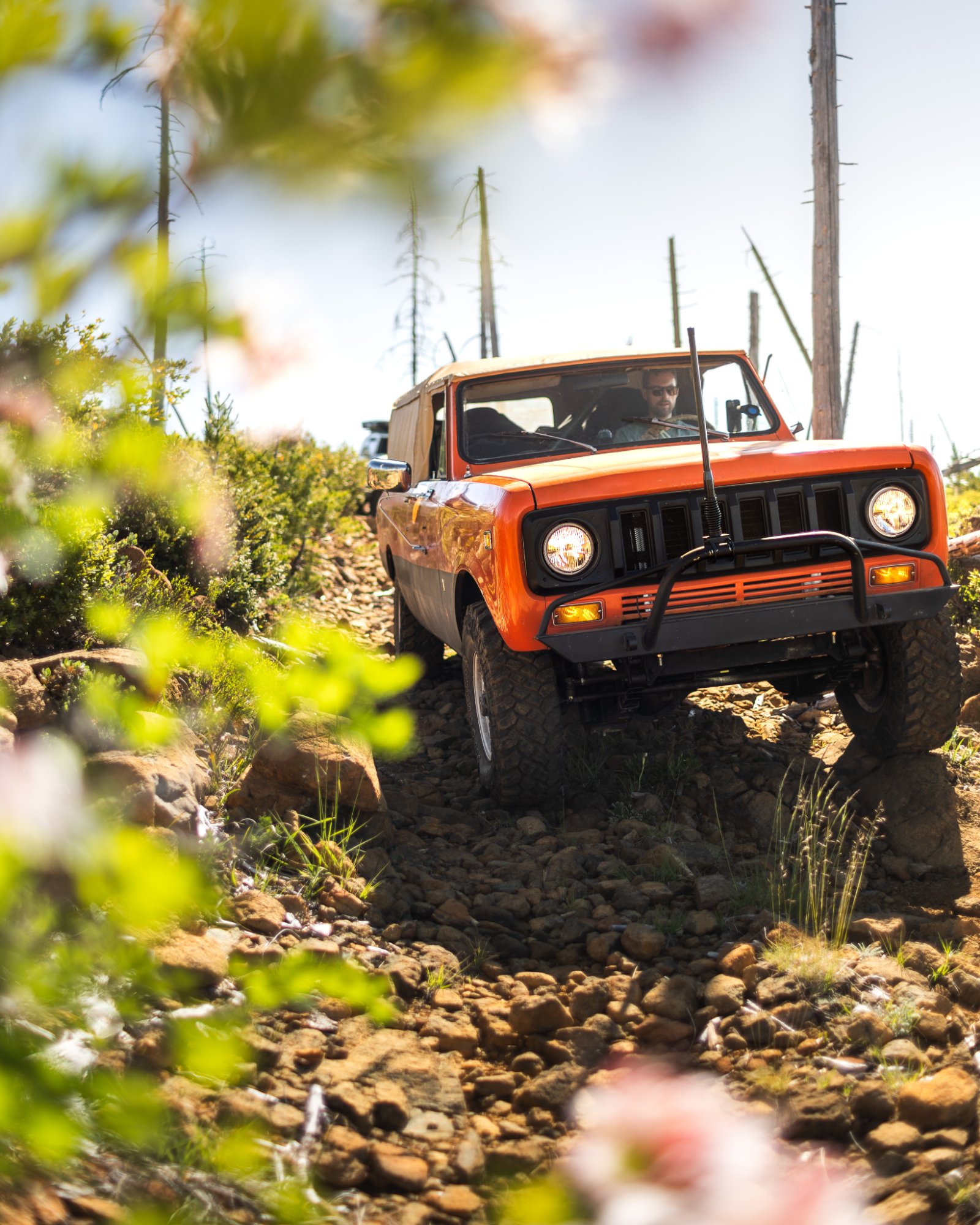
1976 Scout Traveler climbing rocky terrain

If people know these places — if they feel something for them — they're far more likely to act when those places are threatened.

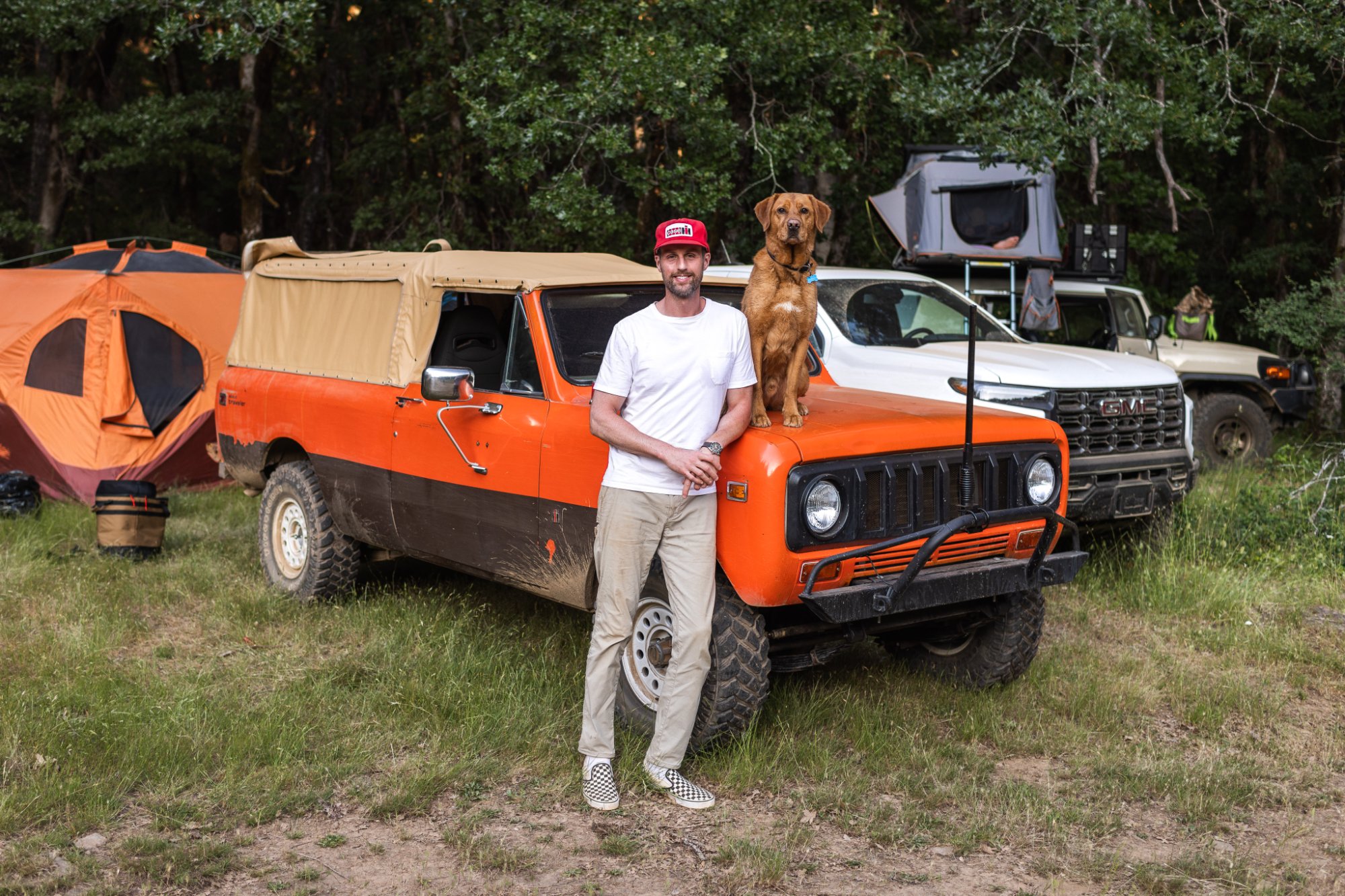
Nick Jaynes with Arlo and the 1976 Scout Traveler

The land has stories. Most of them have never been told.

I'm Nick Jaynes — a journalist, filmmaker, and public relations consultant based out of a truck camper somewhere in the American West. I'm currently on a year-long overland expedition documenting forgotten places on public land with my dogs, Arlo and Rocco.

Ancient America is a documentary series about these places — the archaeology, the geology, the human stories embedded in landscapes that most people drive past without knowing what's there. From 4,000-year-old pictographs to ghost towns to geological formations older than complex life on Earth.

I believe our public land is the most extraordinary thing about this country. And I believe that if people know these places — if they feel something for them — they're far more likely to act when those places are threatened. That's what this work is about: building the emotional connection that leads to protection.

During the day, I run Differential Communications, a PR consultancy serving the automotive aftermarket and overland industry.

Stay in the loop.

Public land news, new episodes, and dispatches from the road. No spam, ever.